• #GOOGLETRANSLATE#
  • Blog / Finance

    Lease a Hyundai at Hanford Hyundai

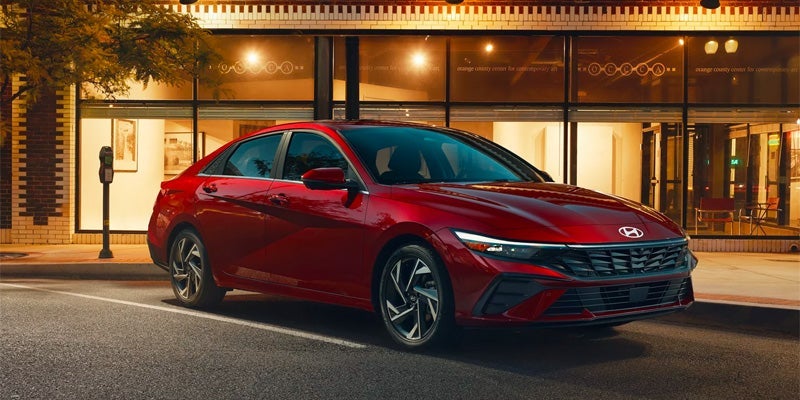
    Hyundai Elantra

    If you're in the market for a Hyundai in the Selma and Visalia area, Hanford Hyundai in Hanford has you covered. With a comprehensive lineup of Hyundai models, we can find the right vehicle for you no matter what your situation.

    Leasing often provides an attractive alternative to buying a vehicle outright, and many Hyundai owners prefer to lease. If you're considering leasing a Hyundai, Hanford Hyundai has outstanding terms and offers on lease agreements.

    The Benefits of Leasing

    Leasing isn't right for everyone, but if the advantages of leasing line up with your priorities, it can be the best option available. You'll have to make your own judgment based on what you're looking for as a Hyundai owner.

    One of the benefits of leasing is that you'll have the ability to upgrade to a newer model Hyundai periodically. Every few years, we'll give you the option to trade in your current vehicle for a newer one. So, if you're a big fan of sampling the latest in Hyundai engineering and design over the years, leasing might be right for you.

    Additionally, lease monthly payments are generally lower than loan payments. This lets you either upgrade to a higher trim level or pare down the impact of your car payment on your monthly budget while still driving the same great vehicle.

    Hanford Hyundai Offers a Wide Range of Leasing Deals

    At Hanford Hyundai, our leasing offers are a substantial part of our business, and we make it a priority to treat our leasing customers right. From everyday low deals to special offers and discounts, we work hard to make sure there's an agreeable leasing alternative for everyone, no matter what your auto needs and budget might be.

    Schedule an appointment and set up a test drive at Hanford Hyundai near Tulare and Fresno today. We can't wait to help you find the right Hyundai for you.

    Posted in:

    Related Posts

    Snag_6f462af

    Maximize Your Trade-In Profit

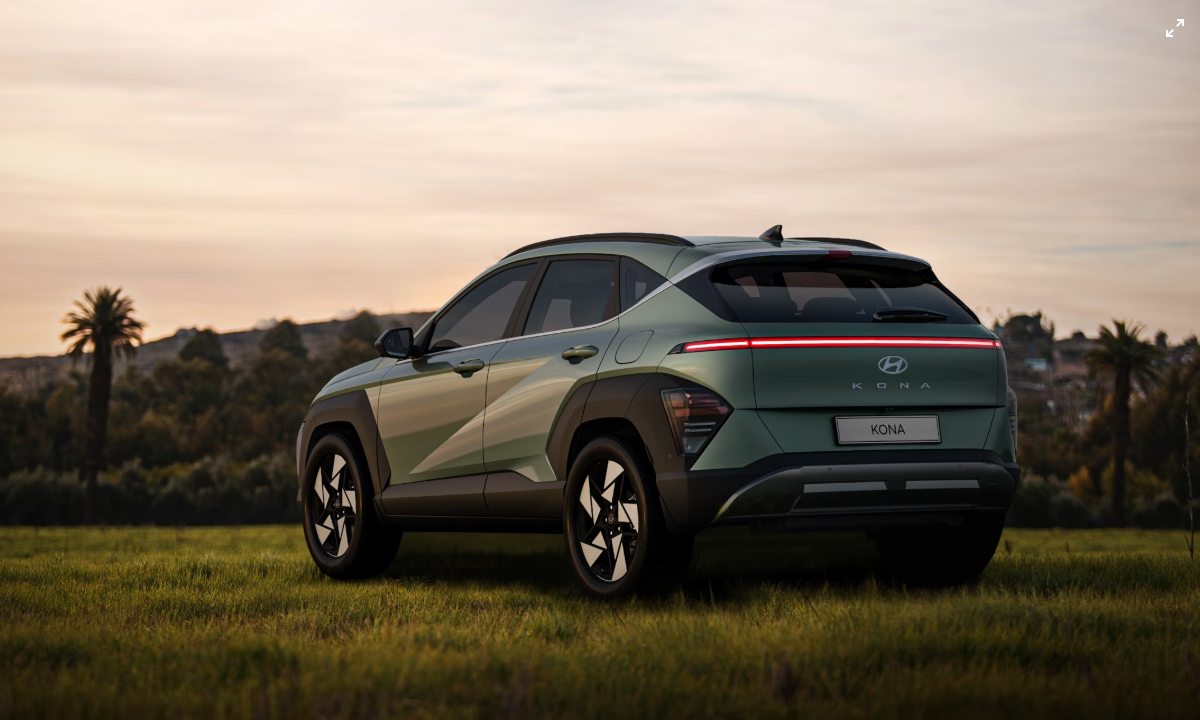
    Trading in your vehicle can be an excellent way to offset the cost of a new car, but how do you ensure you're getting the most for your vehicle? This guide breaks down everything you need to know about accurately valuing your trade and maximizing your return. Understanding the Importance of Accurate Car Valuation Accurately valuing your car can mean the difference between a great deal and leaving money on the table. Tools such as Kelley Blue Book (KBB), TrueTrade (TrueCar's trade-in estimator), and J.D. Power offer accurate car values using real-time market data. These platforms provide a trade-in estimate based on key details such as mileage, model, and condition. Overview of Leading Valuation Methods (KBB, TrueTrade, J.D. Power) Calculating your trade-in value is easier than ever. Use a trade-in or sell calculator: KBB: Offers trade-in, private sale, and dealership values. TrueTrade: Gives sellers market-driven values based on local dealership offers. J.D. Power: Includes factors such as reconditioning costs and local market demand in its calculations. Comprehensive Guide To Calculating Your Trade-In Value Many platforms analyze local market data, car specifications, and other variables to give you a realistic picture of your vehicle's worth. Step-By-Step Process for Using Online Valuation Tools Here's a guide to calculating the price of a used car: Select a trusted platform: Use TrueCar or J.D. Power. Enter your car's details: Include make, model, year, mileage, and any trim packages or features. Describe your car's condition: Rate your vehicle as excellent, good, fair, or poor. Review the estimated value: Most platforms will provide a range. Use multiple tools to confirm consistency. Key Information Needed for Precise Valuation Accurate appraisals require detailed information about your car, including: Make and model: Specific models, especially popular trims, can command higher values. Year: Older cars generally depreciate more, though classic cars may increase in value. Mileage: Low mileage typically results in higher offers. Condition: Cosmetic and mechanical issues can significantly reduce value. Features: Optional upgrades such as leather interiors can increase value. How Condition, Make, Model, and Year Affect Your Car's Trade-In Value Several factors directly influence your vehicle's worth: Condition: A well-maintained car with no dents or scratches will fetch higher offers. Make and model: High-demand models or those with strong resale reputations (e.g., Toyota Camry or Honda CR-V) often receive better trade-in values. Year: Newer vehicles depreciate less, while older cars often lose value unless they're considered classics. Mileage: A car with fewer miles is more appealing to buyers and dealerships alike. The Role of Market Demand in Determining Value Local market trends significantly affect your car's trade-in value. High demand for specific makes and models can increase your car's worth, while oversupply or waning popularity can lower it. For example, SUVs and trucks may see higher demand in the winter, while convertibles might peak in the summer. Certain models sell better in specific areas, such as hybrids in city markets. Maximizing Your Car's Trade-In Value: Top Tips and Strategies Here are some tips for maximizing your trade-in value: Essential Pre-Trade-In Maintenance Tips Maintenance can significantly improve your car's appeal. Before heading to the dealership: Address minor repairs, such as worn tires, broken lights, or chipped paint. Schedule an oil change. Top off coolant, transmission fluid, and windshield washer fluid levels. Replace inexpensive parts, such as wipers or air filters. Improving Cosmetic Appeal: Quick Fixes With Big Impacts The way your car looks can affect its perceived value. Schedule a professional detailing service to clean carpets, polish surfaces, and remove odors. Fix dents and scratches to increase curb appeal. Wash and wax the exterior. Declutter the cabin, glove box, and trunk. Gather All Necessary Documentation Organized paperwork reassures dealerships that your car has been well-maintained. Include the following: Service records Receipts for repairs Warranty documents Ownership history Trade-In vs. Private Sale: Making the Right Decision for You You have two primary options — trading your car in at a dealership or selling it privately. Trading In Here are the pros and cons: Pros: Using a dealership is convenient, as it handles the paperwork for you. It can also offer tax savings and is usually a quick transaction. Cons: Lower offers Selling Privately Here are the pros and cons: Pros: Higher profit potential and more control over pricing Cons: Takes longer and involves safety risks For those valuing speed and simplicity, trading in might be ideal. If maximizing profit is your priority, selling privately could be worth the extra effort. Financial Implications: Which Option Maximizes Your Return? While private sales generally yield higher profits, the gap may not always be significant. For example, a dealership might offer $12,000 for your car, but selling privately could bring in $13,000. However, time, advertising costs, and safety considerations might outweigh the $1,000 difference. Trade-ins also often include tax credits. If your state offers this benefit, you could save hundreds on the taxable portion of your new vehicle purchase. Timing and Convenience Considerations in the Selling Process The decision often comes down to your timeline and willingness to put in the effort. A trade-in is ideal on a tight schedule, as it can be completed in hours. A private sale may be best for sellers with time to spare and the patience to manage inquiries, test-drives, and negotiations. Seasonality also plays a role. For example, SUVs sell faster in winter, while convertibles perform better in spring. Matching your sale to market demand can make a difference. FAQs and Common Misconceptions About Car Trade-In Values Here are some common questions: Does KBB Guarantee Trade-In Offers? No, the auto blue book value is an estimate. Dealerships consider additional factors such as reconditioning costs and market demand. How Accurate are Online Car Value Estimators? While online tools such as TrueCar and Edmunds are useful, only a professional inspection provides a precise valuation. All Online Valuation Tools Yield the Same Results Tools such as TrueCar and KBB often yield slightly different estimates due to varying algorithms and market data sources. Cross-referencing ensures a more accurate understanding. You Must Accept the First Dealership Offer Trade-in offers are negotiable. For more details, visit resources such as KBB's trade-in tool for realistic expectations. Ready To Trade In Your Vehicle? Get the most value for your trade-in by starting with an accurate appraisal today. If you're wondering how to find the trade-in value of a car, use trusted tools such as TrueCar or KBB, and visit Hanford Hyundai to finalize the deal. Don't leave money on the table — take the first step now. a green suv parked in a grassy field by Hyundai Motor Group is licensed with Unsplash License

    santa fe

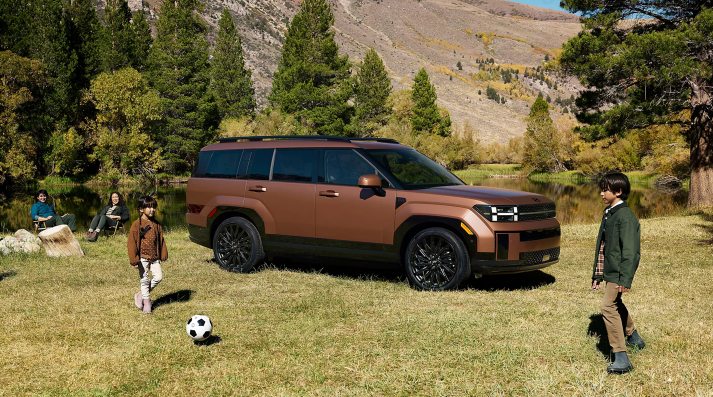
    2025 Hyundai Santa Fe vs. the Kia Sorento

    The midsize SUV market is highly contested, with many options on offer. You'll likely want the combination of ample passenger and cargo space, extensive infotainment features, and a solid powertrain capable of moving a larger vehicle around. The 2025 Hyundai Santa Fe and the Kia Sorento are top candidates delivering this. Fresh from its 2024 full redesign, the Santa Fe is an exciting proposition, while the Sorento has been a popular midsized SUV for several years. The 2025 Santa Fe vs. Sorento Overview Both vehicles have three rows of seating in the cabin, providing enough room for a maximum of seven passengers. They also offer upscale cabin materials and various cutting-edge tech features. Under the hood, the Santa Fe has a standard turbocharged four-cylinder engine that's ideal for city and highway driving. The Sorento has a standard four-cylinder engine with an optional upgrade to a turbocharged unit. Both models offer hybrid alternatives if you want to reduce your carbon emissions and trips to the gas station. Engine Specs and Performance When we analyze their engines, we see that the Santa Fe has a clear advantage with its standard turbo-four, which puts out 277 horsepower. In comparison, the Sorento's standard four-cylinder engine delivers a more lackluster 191 horsepower. The Sorento's turbo-four boosts output to 281 horsepower, but it's only available in higher trims. There's essentially a dead heat between these two competitors regarding fuel economy. Each vehicle achieves 20 mpg in the city and 29 mpg on the highway with their turbocharged engines. The Sorento gets slightly better numbers with its less powerful standard engine: 23 mpg on city roads and 31 mpg on the highway. However, if your top priority is fuel economy, the hybrids are your best options. The Santa Fe and Sorento hybrids have a 1.6-liter turbo-four and reach 36 mpg. Exterior Design The redesigned Hyundai Santa Fe has the imposing appearance you'd expect from a midsize SUV, with its angular exterior helping to maximize the cabin space you can enjoy inside. The headlights and front of this three-row people carrier make a bold statement. The Sorento has its own style following a recent upgrade that has given it a more elegant exterior appearance. Interior Comfort and Cargo Space Inside the cabin, the Hyundai Santa Fe and Kia Sorento comparisons are close. Both offer seven seats — a six-seat layout with captain's chairs in the second row is available. Legroom figures for passengers are similar, with the third row in both vehicles most suitable for kids. The front two rows of seating in the Sorento and Santa Fe provide enough legroom for adults to stretch out. The Santa Fe has the edge in cargo capacity. It features over 14 cubic feet of space behind the third row, compared to around 12 cubic feet in the Sorento. You'll be thankful for the extra space when loading groceries into an SUV full of passengers. The Santa Fe also has among the best maximum storage capacities in the midsize class, with over 79 cubic feet opening up when you fold the two rear rows flat. The same setup in the Sorento gets you 75.5 cubic feet. Technology and Safety Features There's little to choose between these two SUVs on the infotainment front. They each have a 12.3-inch touch screen to access entertainment features and a 12-speaker stereo for listening to your favorite music or podcasts. Wireless Android Auto and Apple CarPlay, Bluetooth, and multiple USB ports also come standard in the Sorento and Santa Fe. The digital gauge clusters measure 4.2 inches, and both vehicles benefit from proximity keyless entry. But the Santa Fe stands out with Hyundai's optional digital key, which lets you start your car and control other features remotely with your phone. Both automakers offer a long list of standard safety features. These include forward collision warning, automatic emergency braking, and pedestrian detection. It's also notable that both SUVs have standard stop-and-go adaptive cruise control, which adjusts your speed and applies the brakes to keep you a safe distance from other traffic during busy times. Most vehicles only include it as an option. Other helpful safety features include a rear-seat alert that reminds you to check for kids in the back before you exit, a driver attention monitor that alerts you when you should take a break, and parking sensors. Pricing and Trims The Santa Fe is available in five trims: the SE, SEL, XRT, Limited, and Calligraphy. The SE includes the standard infotainment features and cloth upholstery throughout its cabin. The SEL trim gets you a power-adjustable driver's seat and synthetic leather upholstery, while the XRT has an off-roading focus with standard all-wheel drive. The range-topping Calligraphy gets nappa leather seats with a suede liner for the headrest. The Sorento has eight trims: the LX, S, EX, SX, X-Line EX, X-Line SX, X-Line SX Prestige, and X-Pro SX Prestige. The LX and S have the normal four-cylinder engine, while the others have the turbo-four as their standard powertrain. Notable upgrades include a power-adjustable driver's seat and automatic climate control in the S trim and above, captain's chairs in the EX trim and above, and leather upholstery and heated front- and second-row seats in the X-Line SX Prestige and X-Pro SX Prestige. In terms of value, the Kia Sorento starts at $31,990, while the lowest price of the Hyundai Santa Fe's base trim is $34,200. However, getting a turbocharged engine in a Sorento will cost you more, beginning at $38,090 with the EX trim. Discover the 2025 Santa Fe at Hanford Hyundai Although both SUVs have their strong points, we think the Hyundai has the edge due to its powerful standard engine, bigger cargo area, and the competitive 2025 Santa Fe price. If you'd like to book a test-drive at our dealership in Hanford, California, don't hesitate to contact us today. Our inventory contains a comprehensive list of Hyundai vehicles, ensuring you can drive away in one that's perfect for your needs.

    tucson

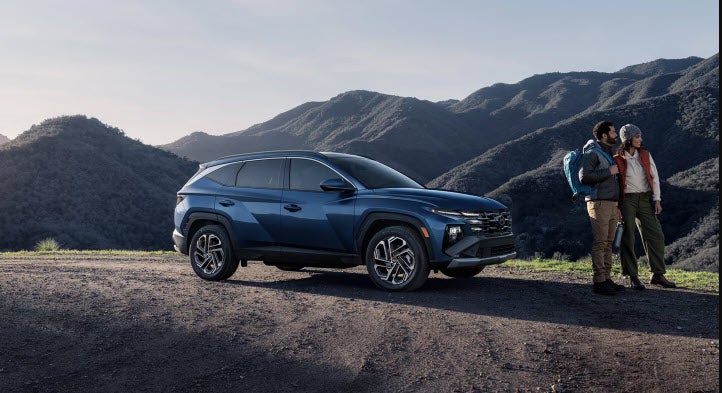
    2025 TUCSON vs. RAV4

    The compact SUV market is fiercely competitive, and the 2025 Hyundai TUCSON and Toyota RAV4 are two excellent choices. These popular new vehicles have been the go-to choice for families, commuters, and adventure seekers. With fresh updates for 2025, let's compare the 2025 TUCSON vs. RAV4 to see how they stack up in terms of performance, features, and overall value. Overview of the 2025 Hyundai TUCSON and Toyota RAV4 The Hyundai TUCSON has come a long way since its introduction in 2004. With each generation, it's transformed into a feature-rich, design-forward compact SUV. The 2025 model represents Hyundai's commitment to modern tech and exceptional value. The Toyota RAV4, a pioneer in the compact SUV segment since 1994, remains one of the best-selling vehicles worldwide. Known for its bulletproof reliability and robust resale value, the RAV4 is a trusted name for long-term owners. While the TUCSON showcases Hyundai's bold design philosophy and tech-focused approach, the RAV4 is often seen as the gold standard in compact SUVs. Key Factors To Consider When comparing the Hyundai TUCSON vs. Toyota RAV4, several factors come into play: Pricing and value Performance and fuel efficiency Safety features Technology and infotainment Comfort and interior space Reliability and resale value Let's break down each of these aspects to see how the 2025 TUCSON and RAV4 measure up. Pricing and Value The 2025 Hyundai TUCSON starts at a slightly lower price point than the RAV4, making it an attractive option for budget-conscious buyers. However, the RAV4's higher initial cost is often offset by its strong resale value. Hyundai counters with its industry-leading warranty, offering five years/60,000 miles of basic coverage and 10 years/100,000 miles on the powertrain, while Toyota only offers a three-year/36,000-mile basic warranty and five-year/60,000-mile powertrain warranty. When it comes to incentives, Hyundai typically offers more lucrative deals, especially for well-qualified buyers or during sales events. Toyota, confident in the RAV4's popularity, tends to be more conservative with discounts. Over a five-year ownership period, the total cost of ownership is comparable, with the TUCSON's lower upfront cost and better warranty potentially giving it a slight edge. Performance and Engine Specifications The 2025 TUCSON offers a range of powertrains, including a standard 2.5-liter four-cylinder engine, a hybrid, and a plug-in hybrid option. The base engine produces 187 horsepower, which is competitive with the RAV4's 203 horsepower from its 2.5-liter four-cylinder. Both vehicles offer smooth-shifting eight-speed automatic transmissions in their gas-powered variants. Fuel economy is key for many buyers. The TUCSON Hybrid boasts impressive numbers, with an EPA-estimated 38 mpg in the city and 38 mpg on the highway. The RAV4 delivers 27 mpg in the city and 35 mpg on the highway. For those needing to tow, the RAV4 has a slight advantage with a maximum towing capacity of 3,500 pounds when properly equipped, compared to the TUCSON's 2,000 pounds. Off-road enthusiasts will appreciate the available all-wheel-drive systems in both models. Safety and Security Features Both the TUCSON and RAV4 come equipped with a comprehensive suite of safety features: Automatic emergency braking Lane departure warning Adaptive cruise control Blind-spot monitoring While the 2025 models have yet to be rated by the National Highway Traffic Safety Administration or the Insurance Institute for Highway Safety, previous models have been rated Top Safety Picks. Hyundai's SmartSense safety suite includes advanced features such as Highway Driving Assist and Remote Smart Parking Assist on higher trims. Toyota counters with its Safety Sense 2.5+ package, which includes similar advanced driver aids. Interior Comfort and Technology Both vehicles offer plenty of interior comfort and technology. The 2025 TUCSON impresses with its modern, almost futuristic interior design. A large touch screen dominates the center console, offering crisp graphics and intuitive controls. The RAV4's interior, while perhaps less avant-garde, provides a familiar and user-friendly environment that many Toyota fans appreciate. Both SUVs come with ample space for passengers and cargo. The TUCSON edges out the RAV4 slightly in rear legroom, while the RAV4 offers a bit more cargo space with the seats up. Material quality is high in both vehicles, with soft-touch surfaces and available leather upholstery in higher trims. Both systems support Apple CarPlay and Android Auto. The TUCSON offers an 8.8-inch screen on lower trims and a larger 10.3-inch optional screen on higher trims. Toyota offers an 8-inch on lower trims and a 10.5-inch on higher trims. Real-World User Experiences Owner reviews for the Hyundai TUCSON vs. Toyota RAV4 specs are generally positive. TUCSON owners often praise the vehicle's value for money, smooth ride, and feature-rich interior. RAV4 owners frequently mention the SUV's reliability and fuel efficiency as key positives. Common complaints for the TUCSON include some reports of infotainment glitches in earlier models, though these issues are expected to be resolved in 2025. RAV4 owners occasionally note road noise at highway speeds as a minor annoyance. Reliability ratings from J.D. Power place both vehicles above average, with the RAV4 rated at 80 out of 100 and the TUCSON typically scoring slightly higher at 81 for dependability. Final Verdict Choosing between the 2025 Hyundai TUCSON and Toyota RAV4 isn't easy — both are excellent compact SUVs with their own strengths. The TUCSON offers a more modern design, a slightly lower starting price, and Hyundai's excellent warranty. The RAV4 counters with Toyota's reputation for reliability, strong resale value, and a more conservative but widely appealing package. For tech-savvy buyers who prioritize the latest features and bold styling, the TUCSON might have the edge. Families looking for a tried-and-true option focusing on long-term reliability might lean toward the RAV4. Experience the Difference at Hanford Hyundai While comparisons are helpful, nothing beats firsthand experience. We invite you to visit Hanford Hyundai to test-drive the 2025 TUCSON for yourself. Our knowledgeable staff can walk you through all the features and help you compare it to the RAV4 in person. If you're considering making the switch from the RAV4 to the TUCSON, ask about our competitive trade-in program. Our finance team is also ready to discuss flexible financing options to fit your budget. Don't miss this opportunity to experience the latest in Hyundai innovation — schedule your test-drive today.